













Hard News




Climate change is reshaping the harvest, while the threat of unsold wine is growing. Yet wine remains an essential asset for Piedmont’s economy and identity: here’s the plan to protect it.
On Thursday, Agriculture Minister Francesco Lollobrigida will head to the Langhe to symbolically inaugurate the 2026 Barolo harvest, picking a bunch of Nebbiolo grapes as a guest of the Deditus association.
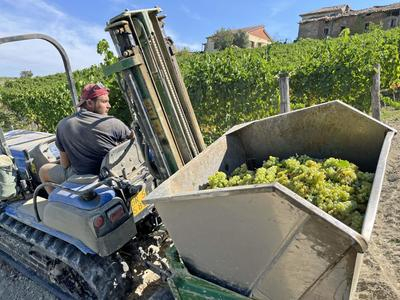
By then, the real harvest will already be well underway — and, in some vineyards, already done. Producers won’t be waiting for the political calendar: acclaimed Barolo producer Roberto Voerzio in La Morra began picking his first Nebbiolo grapes at the end of August and finished harvesting his final crus last Friday. It is a record-early harvest for a variety traditionally associated with the autumn mists that help it reach its full potential.
The reason is a summer of heat and drought that has accelerated ripening and thrown the traditional harvest calendar into disarray across Piedmont’s 43,000 hectares of vineyards.
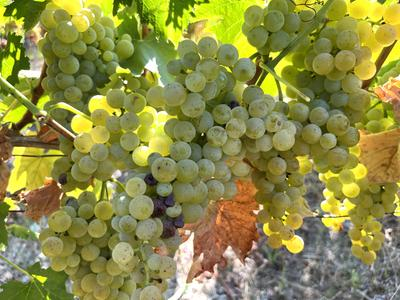
“This is the earliest harvest I have ever experienced,” says Alessandro Ceretto, winemaker for the Alba-based family that farms more than 170 hectares across the Langhe and Roero hills. “We started picking Arneis on August 18, 10 days earlier than last year, and by the end of the month we had moved on to Dolcetto and Barbera. At this rate, we will also have finished picking Nebbiolo for Barolo by the third week of September. The heat has accelerated ripening, but fortunately it hasn’t compromised the quality of the grapes at all. They are beautiful.”
Sergio Germano, president of the Barolo and Barbaresco Protection Consortium, takes a similar view. “We are carrying out our sampling, and sugar ripeness is now almost there, but phenolic ripeness has not yet reached optimal levels. There is no doubt this is an unusual vintage, but the heat is affecting vineyards very differently. The prospects are very good, but this year we’ll have to keep up a relentless pace.”
For Francesco Monchiero, president of the Piemonte Land of Wine consortium, the defining feature of this vintage is the way the ripening periods of different grape varieties are overlapping, creating a kind of bottleneck.
“Until a few years ago, there was more time between the Moscato harvest, Arneis, and then Dolcetto and Barbera. Now everything is compressed into the same period. But managing several harvests at once is complicated, almost impossible: there is a shortage of both space and labor.”
The unusually early Barbera harvest is further evidence of a vintage with barely a pause.
“Some producers started picking the first bunches immediately after Ferragosto — the mid-August holiday when much of Italy takes its summer break — but those are exceptions,” says Filippo Mobrici, president of the Barbera d’Asti Consortium. “The bulk of the harvest will take place over the next two weeks. Quality is excellent, while yields are slightly lower than last year.”
As pressing as the climate is, there is another concern: stagnant markets, with the risk of overproduction and speculative movements in the prices of grapes and bulk wine.
“The reduction in yields we have implemented, together with the extraordinary intervention by the regional government, should help stabilize the market,” Mobrici says. “By reducing stocks, we should see less speculation and, consequently, less downward pressure on prices. Markets are still sluggish, particularly in the United States, but there are some positive signs from Northern Europe and Germany. We can manage the immediate situation, but we need a broader vision: Piedmont’s wine sector needs to consider what the landscape might look like 15 or 20 years from now.”
The picture is considerably brighter in Gavi, which continues to demonstrate a strong international appeal. More than 12 million bottles were exported in 2025, accounting for 91% of total production.
Britain remains the leading market, with around 7 million bottles, followed by the United States. Among emerging markets, China stands out: exports there have risen from fewer than 10,000 bottles in 2023 to more than 100,000 in 2025.
“In a complex international environment, the appellation is demonstrating resilience and an ability to maintain a presence in very different markets,” says Maurizio Montobbio, president of the Gavi Protection Consortium. “There is also an encouraging first sign from the Italian market, where sales have climbed back above one million bottles, supported by an increasingly direct relationship between consumers, the region and its wineries.”
Tortona’s Timorasso is also continuing its steady advance in international markets.
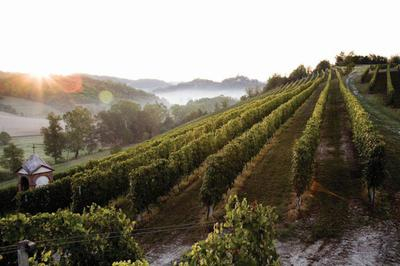
“Over the past year, La Colombera has consolidated its growth, both on the production side and commercially,” says owner Elisa Semino. “Our productive vineyard area has grown by almost two hectares of Timorasso, bringing the estate’s total area devoted to the variety to 13 hectares.
“At the same time, our presence in overseas markets has expanded, with entry into new areas such as Malta and parts of Canada, while our position in the United States has been strengthened by a new importer.
“For 30 years, we have managed our growth steadily and gradually, seeking to maintain a balance between production and market demand. Continuing along this path, we are recording overall growth of 5% this year.”
